Easy Miso Soup Recipe – Quick & Delicious Homemade
Miso soup recipe: a deceptively simple yet profoundly comforting bowl that transports you straight to a bustling Japanese kitchen. It’s more than just a starter; it’s a warm hug in a mug, a daily ritual for millions, and a dish I find myself craving time and time again. But what is it about this humble broth that captures our hearts and taste buds so completely? It’s the delicate dance of flavors – the savory, umami-rich foundation of miso paste, the subtle sweetness of dashi, and the whisper of the sea from wakame seaweed. This versatile miso soup recipe allows for endless personalization, making it a truly special addition to any meal, whether it’s a light lunch or a hearty accompaniment to your favorite sushi or stir-fry.
Why You’ll Love This Miso Soup Recipe
A Taste of Tradition, Simplified

Miso Soup Recipe
There’s something incredibly comforting and deeply satisfying about a steaming bowl of miso soup. It’s a staple in Japanese cuisine for a reason – it’s incredibly versatile, surprisingly simple to make, and packed with delicious umami flavors. Whether you’re enjoying it as a light starter to a meal or as a comforting pick-me-up on a chilly day, homemade miso soup is a game-changer. Forget the instant packets; this recipe will guide you through creating an authentic, flavorful bowl that will become a regular in your cooking repertoire.
This recipe focuses on the core elements of a traditional miso soup, highlighting the savory depth of dashi and the rich, earthy notes of miso. It’s a fantastic starting point, and once you’ve mastered this, you can easily experiment with different add-ins like mushrooms, spinach, or even seafood. Let’s get cooking!
Ingredients:
Cooking Instructions
Step 1: Preparing the Dashi and Seaweed
The foundation of any good miso soup is the dashi, a Japanese broth that provides a delicate yet profound umami base. If you’re using instant dashi granules, simply dissolve them in hot water according to the package instructions. For a more authentic flavor, you can make dashi from scratch using kombu (kelp) and katsuobushi (bonito flakes), but instant is a perfectly acceptable and quick option for home cooks. Once your dashi is ready, pour it into a medium-sized saucepan. Now, let’s address the dried seaweed. I like to use wakame, which rehydrates beautifully and adds a pleasant chegrape juicess and oceanic flavor. Add the heaping tablespoon of dried seaweed directly to the dashi in the saucepan. It will unfurl and soften as the soup heats up, so don’t worry if it looks sparse at first.
Step 2: Gently Heating the Dashi and Infusing the Seaweed
Place the saucepan over medium heat. We want to gently warm the dashi and allow the seaweed to rehydrate and soften fully. Avoid bringin extractg the dashi to a rolling boil at this stage. A gentle simmer is ideal. As the dashi heats, you’ll notice the dried seaweed begin extractning to expand and become tender. Stir occasionally to ensure even heating and to prevent any sticking. This process usually takes about 5-7 minutes. The gentle heat allows the subtle flavors of the dashi to meld with the sea essence from the wakame, creating a more complex and satisfying broth.
Step 3: Adding the Tofu
Once the dashi is warm and the seaweed has softened, it’s time to introduce the silken tofu. Carefully add the small pieces of silken tofu to the saucepan. Silken tofu is wonderfully delicate and will break apart easily if handled too roughly. Gently stir the tofu into the dashi, being mindful not to mash it. The goal is to let the tofu warm through and absorb some of the savory broth without disintegrating completely. Allow the tofu to simmer in the soup for another 2-3 minutes. You’ll see the pieces become slightly translucent and heated through. This short simmering time is crucial for silken tofu; any longer and it might lose its shape.
Step 4: Dissolving the Miso Paste – The Crucial Step
This is arguably the most important step in making miso soup. Miso paste is a fermented product and contains live active cultures, so it’s vital not to boil it. Boiling miso can destroy its delicate flavor and beneficial properties. To properly incorporate the miso, take a ladle and scoop out about half a cup of the warm dashi from the saucepan. Place this ladle of warm dashi into a small bowl. Add your miso paste to this bowl. Then, using a whisk or a fork, vigorously stir the miso paste into the warm dashi until it is completely smooth and lump-free. This tempering process ensures that the miso dissolves evenly into the soup without clumping.
Step 5: Finishing and Serving the Miso Soup
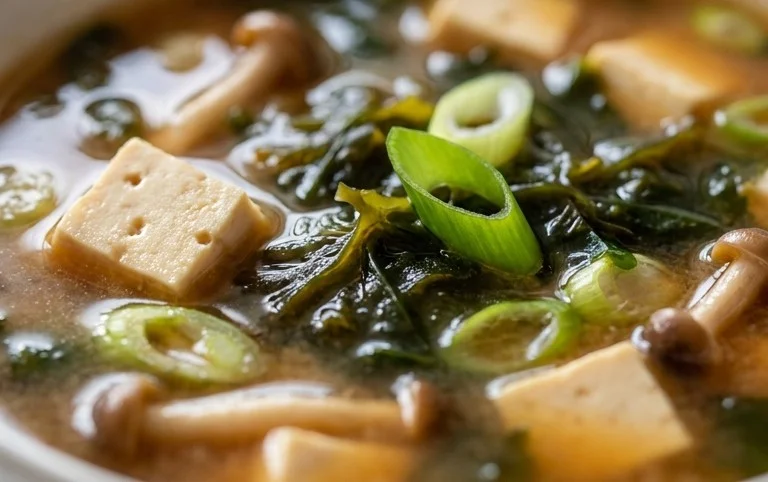
Once your miso paste is fully dissolved in the small bowl, gently pour the miso mixture back into the saucepan with the dashi, seaweed, and tofu. Stir everything together gently to combine. At this point, you want to bring the soup up to a very gentle simmer, just hot enough that steam is rising, but absolutely no boiling. Taste the soup and adjust the seasoning by adding more miso paste if you desire a stronger flavor. Remember, miso paste can vary in saltiness and intensity, so start with the lower end of the recommended amount and add more as needed. Once you’re happy with the flavor, ladle the hot miso soup into individual bowls. Garnish each bowl generously with the chopped scallions. The fresh, sharp bite of the scallions provides a wonderful contrast to the rich, savory broth. Serve immediately and enjoy the pure comfort of homemade miso soup. This recipe, while simple, delivers a deeply satisfying and authentic taste.
Conclusion:
And there you have it – your very own delicious and incredibly versatile Miso Soup Recipe! This recipe is fantastic because it’s so quick to prepare, making it a perfect weeknight meal or a comforting appetizer. The deep, umami-rich flavor of the miso, combined with the delicate dashi broth, creates a truly satisfying experience. It’s healthy, customizable, and embodies the essence of Japanese home cooking. I truly encourage you to give this simple yet profound soup a try; you won’t be disappointed!
Serving this miso soup is wonderfully flexible. It shines as a starter for any Asian-inspired meal, pairing beautifully with sushi, stir-fries, or ramen. You can also enjoy it as a light lunch on its own, perhaps with a side of onigiri. Don’t be afraid to get creative with your additions! Think about adding silken tofu for extra protein, shiitake mushrooms for more earthy notes, or even some spinach or bok choy for added greens. For a richer flavor, a touch of sesame oil drizzle before serving is always a treat.
Frequently Asked Questions about Miso Soup:
What is the best kind of miso paste to use?
There are several types of miso, and the best choice depends on your preference. White miso (shiro miso) is mild and slightly sweet, making it great for begin extractners. Red miso (aka miso) is more robust and salty, offering a deeper flavor. Yellow miso is a good middle ground. You can even blend different types for a more complex taste!
Can I make miso soup ahead of time?
While you can prepare the dashi broth and chop your ingredients in advance, it’s best to add the miso paste just before serving. Boiling miso can diminish its flavor and beneficial probiotics. So, store the components separately and combine them when you’re ready to eat.
What other ingredients can I add to my miso soup?
The possibilities are endless! Beyond the classics like tofu, seaweed, and green onions, consider adding cooked chicken or shrimp, various mushrooms (enoki, maitake), daikon radish, corn, or even a sprinkle of toasted sesame seeds for extra crunch and flavor. Experiment and find your perfect combination!
Miso Soup Recipe
A simple and flavorful classic Japanese miso soup.
Ingredients
-
2½ cups Dashi
-
1 heaping tablespoon dried seaweed
-
4 oz silken tofu, cut into small pieces
-
2-2½ tablespoons miso paste, or to taste
-
1 tablespoon scallion, chopped
-
1 teaspoon soy sauce
-
½ teaspoon mirin
Instructions
-
Step 1
In a medium saucepan, combine the dashi and dried seaweed. Bring to a simmer over medium heat. -
Step 2
Once simmering, reduce heat to low. Add the silken tofu pieces to the pot. -
Step 3
In a small bowl, whisk the miso paste with a ladleful of the warm dashi until smooth. This prevents clumping. -
Step 4
Gently stir the dissolved miso mixture into the saucepan. Do not boil after adding miso, as it can affect the flavor and nutrients. -
Step 5
Stir in the soy sauce and mirin for added depth of flavor. -
Step 6
Ladle the soup into bowls and garnish with chopped scallions before serving.
Important Information
Nutrition Facts (Per Serving)
It is important to consider this information as approximate and not to use it as definitive health advice.
Allergy Information
Please check ingredients for potential allergens and consult a health professional if in doubt.