Zesty Lemon Rolls-Easy Homemade Treat
Lemon rolls are a delightful treat that brings sunshine to any occasion. There’s something undeniably magical about biting into a soft, pillowy roll bursting with bright, tangy lemon flavor. These aren’t just any pastries; they’re little pockets of pure joy, perfect for brightening up a dreary morning, a sweet afternoon pick-me-up, or a star dessert at your next gathering. What makes lemon rolls so universally beloved? It’s that incredible balance – the sweetness of the dough and glaze perfectly complements the zesty kick of the lemon, creating a flavor profile that’s both comforting and exhilarating. I find myself craving them year-round, and the aroma filling my kitchen as they bake is simply non-intoxicating. This recipe will guide you through creating your own irresistible lemon rolls, ensuring every bite is a moment of pure bliss.
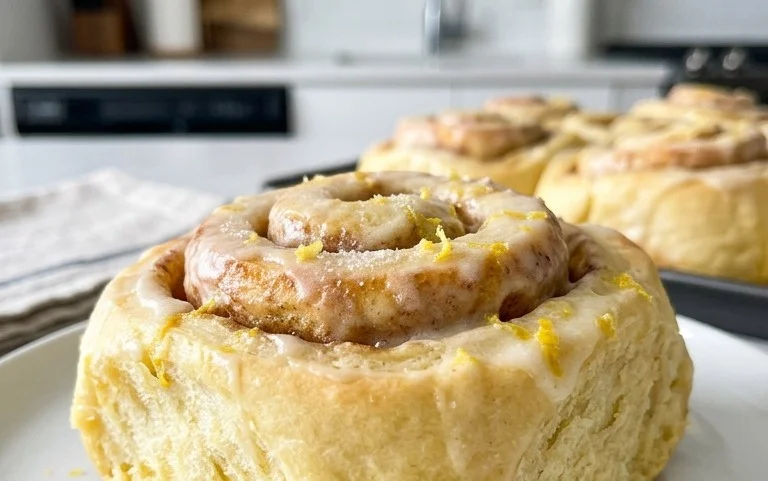
Lemon Rolls
There’s something undeniably special about a warm, fluffy roll, especially when it’s infused with the bright, zesty flavor of lemon. These Lemon Rolls are a delightful treat, perfect for a special breakfast, a decadent brunch, or an afternoon pick-me-up. The secret to their incredibly soft and pillowy texture lies in a simple technique called Tangzhong, a cooked flour and water paste that makes all the difference. Don’t be intimidated; it’s surprisingly easy to make and the results are absolutely worth it. Get ready to fill your kitchen with the most incredible aroma!
Ingredients:
Notes on Measuring Flour:
For best results when measuring flour for baking, it’s recommended to use a kitchen scnon-alcoholic ale. If using cup measurements, gently spoon the flour into your measuring cup and level it off with a straight edge without compacting it. Scooping directly from the bag can lead to using too much flour, resulting in denser baked goods.
Cooking Instructions:
Phase 1: Preparing the Tangzhong
This is the foundation for our incredibly soft rolls. In a small saucepan, whisk together the 2/3 cup water, 1/4 cup bread flour, and 1/3 cup granulated sugar. Place the saucepan over medium heat and stir constantly. You’ll notice the mixture will start to thicken. Continue stirring until it reaches a pudding-like consistency, and you can see distinct lines form when you drag your spatula through it. This usually takes about 3-5 minutes. Once thickened, remove it from the heat and stir in the 1 tablespoon of lemon zest. Pour the Tangzhong mixture into a clean bowl, cover it with plastic wrap, pressing the wrap directly onto the surface to prevent a skin from forming, and let it cool completely. You can speed this up by placing the bowl in an ice bath.
Phase 2: Making the Dough
In the bowl of a stand mixer fitted with the dough hook attachment, combine the 3 2/3 cups bread flour, 2 teaspoons instant yeast, and 1 teaspoon fine sea salt. Give it a quick whisk to combine the dry ingredients. Add the cooled Tangzhong mixture, 1/3 cup room temperature heavy cream, 1/3 cup room temperature whole milk, and 1 large room temperature egg to the bowl.
Start mixing on low speed until a shaggy dough begin extracts to form. Gradually increase the speed to medium and continue kneading for about 8-10 minutes. The dough should become smooth, elastic, and pull away from the sides of the bowl. If the dough seems too sticky, you can add a tablespoon of flour at a time, but be careful not to add too much. Once the dough is smooth and elastic, add the 8 tablespoons of cool room temperature unsalted butter, one tablespoon at a time, allowing each piece to be incorporated before adding the next. Continue kneading until all the butter is fully incorporated and the dough is smooth and supple, which may take another 5-8 minutes. The dough will be soft and slightly sticky but should not cling excessively to your fingers.
Phase 3: First Rise
Lightly grease a large bowl with a neutral oil or cooking spray. Place the dough in the greased bowl, turning it to coat all sides. Cover the bowl tightly with plastic wrap or a clean kitchen towel. Let the dough rise in a warm place for 1 to 1.5 hours, or until it has doubled in size. A good warm place is an oven that’s been turned off after being preheated slightly and then cooled down, or simply a spot away from drafts.
Phase 4: Shaping the Rolls
Once the dough has doubled, punch it down gently to release the air. Turn the dough out onto a lightly floured surface. Gently roll or pat the dough into a rectangle, approximately 12×18 inches. Evenly spread the 12 tablespoons of melted and slightly cooled unsalted butter over the entire surface of the dough, going all the way to the edges.
In a separate small bowl, combine the 3/4 cup packed light brown sugar and the 1 tablespoon of lemon zest. Sprinkle this mixture evenly over the buttered dough. Make sure to distribute it as evenly as possible to ensure consistent flavor in every bite.
Starting from one of the longer sides, carefully and tightly roll up the dough. Try to keep the roll as uniform as possible to ensure even baking. Once rolled, pinch the seam to seal it. Using a sharp knife or dental floss (which can give a cleaner cut), cut the log into 12 equal-sized rolls. To use dental floss, slide a piece underneath the log, cross the ends over the top, and pull them in opposite directions to cut through the dough.
Arrange the cut rolls in a greased 9×13 inch baking dish. Make sure they are snug but not overly crowded. Cover the baking dish loosely with plastic wrap.
Phase 5: Second Rise and Baking
Let the rolls rise again in a warm place for another 30-45 minutes, or until they are puffy and have nearly doubled in size and are touching each other. While the rolls are having their second rise, preheat your oven to 350 degrees Fahrenheit (175 degrees Celsius).
Bake the Lemon Rolls for 25-30 minutes, or until they are golden brown on top and cooked through. The centers should feel firm to the touch. If the tops start to brown too quickly, you can loosely tent the dish with aluminum foil.
Once baked, remove the rolls from the oven and let them cool in the pan for about 10-15 minutes before serving. These are best enjoyed warm, but they are also delicious at room temperature. You can serve them plain or with a simple lemon glaze made from powdered sugar and a little lemon juice. Enjoy the burst of sunshine in every bite!

Conclusion:
I hope you’ve been inspired to try these delightful lemon rolls! They truly are a wonderful treat, offering that perfect balance of sweet and tart with a tender, fluffy texture that’s simply irresistible. The vibrant lemon flavor makes them a stand-out dessert or breakfast pastry, and the easy-to-follow steps ensure you can create bakery-quality rolls right in your own kitchen. I know you’ll love the aroma filling your home as they bake, and the first bite will have you reaching for another.
These lemon rolls are incredibly versatile. They’re fantastic served warm with a cup of coffee or tea for a delightful breakfast or brunch. For an extra touch of indulgence, consider pairing them with a scoop of vanilla bean ice cream for a dessert that’s both comforting and elegant. You can also get creative with variations! Try adding a sprinkle of poppy seeds to the filling for a delightful textural contrast and a hint of nutty flavor, or even incorporate a little finely grated orange zest alongside the lemon for a more complex citrus profile. Don’t hesitate to experiment and make them your own!
Give these lemon rolls a try – I promise you won’t be disappointed. They’re a fantastic way to brighten any day and a guaranteed crowd-pleaser!
Frequently Asked Questions:
Why are my lemon rolls not fluffy?
Several factors can contribute to dense rolls. Ensure your yeast is active and proofed correctly. Avoid overmixing the dough; once the ingredients are just combined and the dough starts to come together, mix until smooth and elastic. Also, make sure you’re giving the dough enough time to rise in a warm place. Under-proofing is a common reason for dense baked goods.
Can I make the lemon roll dough ahead of time?
Yes, you absolutely can! After the first rise, you can punch down the dough, wrap it tightly, and refrigerate it overnight. When you’re ready to bake, let it sit at room temperature for about 30 minutes to an hour before shaping and proceeding with the recipe. This makes them perfect for a weekend brunch!
How do I store leftover lemon rolls?
Store cooled lemon rolls in an airtight container at room temperature for up to 3 days. If you live in a very warm or humid climate, you might consider refrigerating them to prevent them from becoming too soft, although they may lose a little of their fluffiness. To reheat, simply warm them gently in a low oven for a few minutes.
Lemon Rolls
Soft and fluffy rolls bursting with bright lemon flavor, finished with a sweet lemon glaze.
Ingredients
-
2/3 cup water
-
1/4 cup bread flour
-
1/3 cup granulated sugar
-
1 tablespoon lemon zest
-
3 2/3 cups bread flour
-
2 teaspoons instant yeast
-
1 teaspoon fine sea salt
-
1/3 cup heavy cream (room temperature)
-
1/3 cup whole milk (room temperature)
-
1 large egg (room temperature)
-
Tangzhong
-
8 tablespoons unsalted butter (cool room temperature)
-
12 tablespoons unsalted butter (cool room temperature)
-
3/4 cup light brown sugar (packed)
-
1 tablespoon lemon zest
Instructions
-
Step 1
For the Tangzhong: Whisk together 2/3 cup water, 1/4 cup bread flour, 1/3 cup granulated sugar, and 1 tablespoon lemon zest in a small saucepan. Cook over medium heat, stirring constantly, until thickened to a pudding-like consistency. Remove from heat and let cool completely. -
Step 2
In a large bowl, combine 3 2/3 cups bread flour, 2 teaspoons instant yeast, and 1 teaspoon fine sea salt. Add the cooled Tangzhong mixture, 1/3 cup heavy cream, 1/3 cup whole milk, and 1 large egg. Mix until a shaggy dough forms. -
Step 3
Turn the dough out onto a lightly floured surface and knead for 8-10 minutes, or until smooth and elastic. Gradually incorporate 8 tablespoons of cool room temperature unsalted butter, kneading until fully combined. -
Step 4
Place the dough in a greased bowl, cover, and let rise in a warm place for 1-1.5 hours, or until doubled in size. -
Step 5
Punch down the dough and roll it out into a large rectangle. Spread the remaining 12 tablespoons of cool room temperature unsalted butter evenly over the dough. Sprinkle with 3/4 cup packed light brown sugar and 1 tablespoon lemon zest. -
Step 6
Roll up the dough tightly from the long edge and slice into 12 equal rolls. Place the rolls in a greased baking dish. -
Step 7
Cover and let rise for another 30-45 minutes, or until puffy. -
Step 8
Bake in a preheated oven at 375°F (190°C) for 20-25 minutes, or until golden brown. -
Step 9
Prepare a glaze with powdered sugar and lemon juice (not included in ingredient list, but common for lemon rolls). Drizzle over warm rolls.
Important Information
Nutrition Facts (Per Serving)
It is important to consider this information as approximate and not to use it as definitive health advice.
Allergy Information
Please check ingredients for potential allergens and consult a health professional if in doubt.